Managed Firewall Guide for SMEs: Why It Matters in 2026
Complete guide to managed firewalls for SMEs: what they are, how they work, why they matter in 2026, and how to choose the right provider.
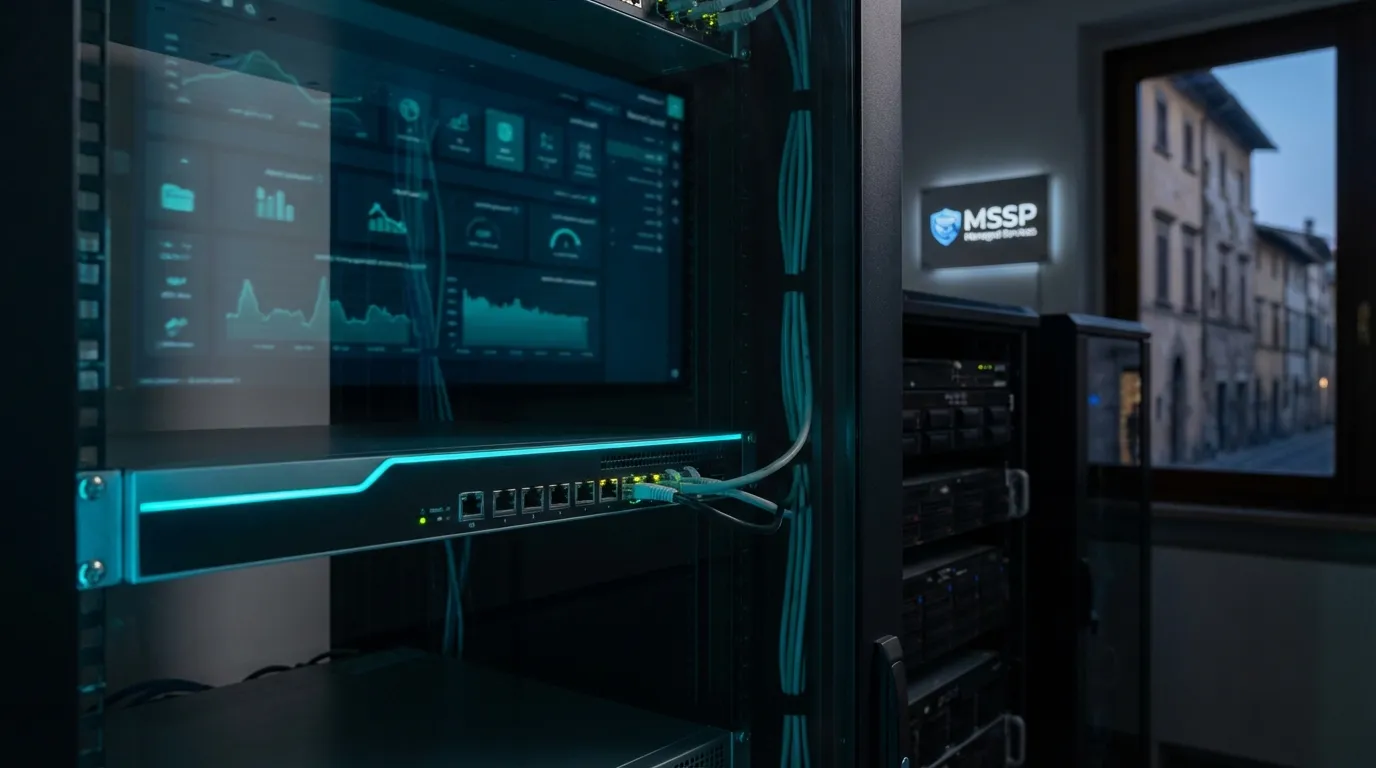
A managed firewall is not just a firewall appliance with a support contract. It is a perimeter security model in which rules, monitoring, updates, access paths, and evidence are operated in a controlled way over time.
For SMEs, that distinction matters. Many businesses buy a firewall and assume the problem is solved. In reality, unmanaged or poorly maintained perimeter devices often become stale, permissive, and invisible until an incident exposes the weakness.
What a managed firewall actually includes
At minimum, a managed firewall service should cover:
- deployment and hardening
- rule management
- firmware and signature updates
- remote access design
- visibility into events and changes
- support for suspicious activity or urgent changes
The value is ongoing administration, not just the device itself.
Why it matters more in 2026
The threat landscape has shifted in two ways that affect SMEs directly:
- Attackers increasingly exploit exposed services, misconfigurations, and weak remote access.
- Regulations and customers increasingly ask for evidence, not just promises.
That means perimeter security is no longer only about blocking traffic. It is also about proving that access is controlled, changes are traceable, and incidents can be reconstructed.
Managed vs unmanaged perimeter
An unmanaged firewall often ends up with:
- old rules left open “temporarily”
- little visibility into which traffic matters
- no central reporting
- no clear process for urgent changes
- overreliance on one consultant or internal admin
A managed model reduces those weaknesses by making operation part of the service.
What SMEs should expect from a provider
When evaluating a managed firewall service, ask:
- How are rule changes requested and approved?
- How is remote access protected?
- Are logs retained and reviewable?
- How are updates handled?
- What happens when suspicious traffic is detected?
- How quickly can access or exposure be changed in an emergency?
If those answers are vague, the service is probably just outsourced installation, not real managed security.
Compliance angle
NIS2 does not say “buy a managed firewall”. What it does require is a set of controls that managed perimeter services often support very well:
- controlled access
- security monitoring
- logging and evidence
- incident handling readiness
- risk reduction for exposed systems
For many SMEs, a managed firewall becomes the most practical way to implement those technical expectations without building an internal security function.
Conclusion
The right question is not whether a firewall is necessary. It is whether the company can maintain one at the level today’s risks and customer expectations require.
For most SMEs, a managed firewall is the cleaner and safer answer because it turns perimeter security from a one-time setup into an operating capability.